


Views: 1 创始人: Site Editor Publish Time: 2026-02-25 Origin: Site


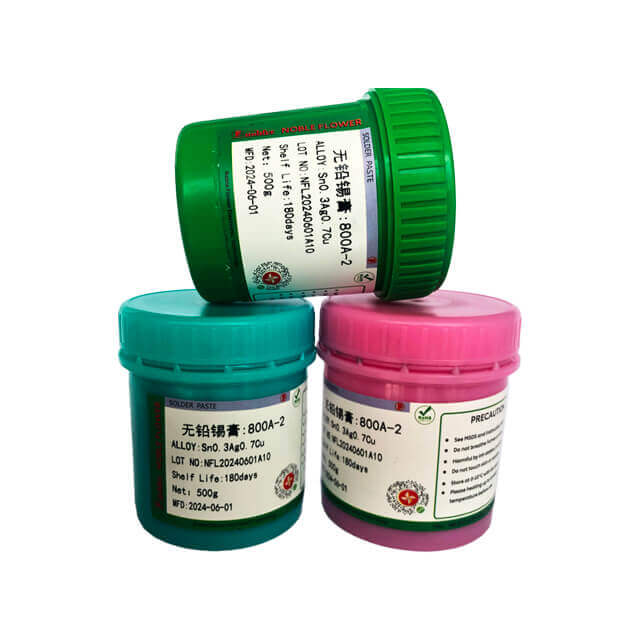
Solder paste: a key material for electronic
soldering
In the field of modern electronics
manufacturing, solder paste, as a core material, plays an irreplaceable role in
the connection process of electronic components. Its emergence has greatly promoted
the development of surface assembly technology (SMT) and provided a solid
guarantee for the miniaturization and high performance of electronic products.
1. The birth and evolution of solder paste
In the 70s of the 20th century, with the
development of electronic products in the direction of miniaturization and
lightweight, traditional perforated welding technology was difficult to meet
the demand, and surface assembly technology came into being. As a key
supporting material for SMT, solder paste has also entered the stage of
history. Early solder paste technology was relatively simple and was mainly
used for basic soldering needs. However, with the rapid development of the
electronics industry, the performance requirements of solder paste are becoming
increasingly stringent, driving its continuous innovation. Nowadays, solder
paste has become an indispensable and important material in the production of
electronic products, and its quality is directly related to the performance and
reliability of electronic products.
2. Complex and exquisite composition
Solder paste is a paste-like system made up
of a variety of ingredients, each performing its own duties and working
synergistically.
1. Solder alloy powder: the "main
force" of soldering
Solder alloy micropowders dominate solder
pastes, often exceeding 80%. These fine powders are obtained by special
treatment of solder alloys, and common preparation methods include chemical
reduction, electrolytic deposition, mechanical crushing and atomization
milling. Among them, atomization has become the preferred method for preparing
powders for solder paste due to its unique advantages. During the atomization
process, the prepared solder alloy is heated and melted, and then atomized into tiny
powders under the action of CO₂, N₂, Ar₂ and other gases. The
powder prepared by this method is spherical or near-spherical, which can not
only meet the strict requirements of solder paste for
powder shape, particle size, oxygen content and fluidity, but also retain the
performance of the original solder alloy to the greatest extent.
The particle size, morphology and
uniformity of solder powder have a crucial impact on the printing performance
of solder paste. The ideal powder shape should be spherical with uniform
particle size to ensure uniformity and resolution of printing and avoid
printing defects. In addition, spherical powders have the smallest surface area
and have a lower degree of surface oxidation compared to irregular powders. The
oxygen content of the powder is one of the key factors affecting the
performance of the solder paste, and too high oxygen content will reduce the
welding performance of the solder paste. Therefore, during the production
process, the particle size range of the powder must be strictly controlled. At
present, the particle size of solder powder for the preparation of solder paste
in China is generally controlled between 20μm and 45μm, which is defined as
type III powder and type IV powder in the surface assembly industry. However,
with the continuous advancement of electronic technology, the demand for fine-pitch
soldering is increasing, and the graphics on printed boards are becoming more
and more detailed, and more and more manufacturers are using ultra-fine powders
below 20μm to prepare solder paste. However, the use of ultrafine powders also
brings new challenges, and the protection of the powder becomes particularly
important due to its increased surface area and the oxygen content on the
surface.
In the early days of the development of the electronics industry, traditional SnPb solder and solder powder were widely used due to their mature technology and good soldering performance. However, with the increasing global awareness of environmental protection and the deepening of awareness of the dangers of lead pollution, countries have introduced laws and regulations to restrict the use of lead-containing solder. In this context, the research and development of lead-free solder has become a hot topic in the industry. Among them, tin-silver-copper (Sn-Ag-Cu, SAC) lead-free solder is one of the most potential alternative materials due to its properties close to tin-lead solder. For example, Sn3Ag0.5Cu (SAC305) is a classic lead-free solder recommended by the Japan Electronics and Information Technology Industry Association (JEITA), which has excellent physical properties and high-temperature stability, and the bond strength after soldering is comparable to or even higher than that of traditional tin-lead eutectic solder. In the early stages of lead-free development, most manufacturers chose SAC305 as their first choice for lead-free solder. However, due to the rising price of silver, institutions are working on low-silver solder pastes with less than 1% silver in order to reduce costs. For example, Senju has achieved a series of results in the research and development of lead-free solders, filing several patents. In 2004, the company patented SAC solder containing 0% to 8% Ag and 0% to 5% Cu, which met the reflow temperature requirements but was insufficient to eliminate the monument effect. In 2006, another patent was filed for Sn-Ag-Cu-P solder with 0.3% - 0.4% Ag, claiming that the solder has the same solderability, conductivity and mechanical properties as SAC305, while reducing the toxicity problems caused by the reaction between Ag and acid and base. In 2010, an application for a Sn-Ag based solder with an Ag content of 0.2% - 1.0% and trace amounts of Sb, Cu or Ni, Co, Fe, Mn, Cr, Mo or P, Ga, Ge and other elements were added, the addition of these elements can improve the mechanical strength of the alloy, but too high an amount will cause the liquid phase temperature of the alloy to rise. This alloy claims to effectively eliminate the phenomenon of erection during welding. In addition, the low-silver solder paste developed by Koki is Sn0.1Ag0.7Cu0.03Co, with a melting point of 217 - 227°C, and the reduction of silver addition makes the product less affected by market price fluctuations, and the addition of cobalt can prevent the microstructure changes caused by thermal cycling, maintain the dense structure, inhibit the segregation and agglomeration of age-sensitive intermetallic compounds, and reduce the cost by 10% to 20% compared to SAC305. The low-cost silver-free solder developed by Genma Corporation has a composition of Sn0.7Cu0.03Ni0.01Co0.005Ge, a melting temperature of 226 - 228°C, and the addition of nickel and cobalt improves the strength and reliability of the solder at a cost of 54% less than SAC305.
Flux: The "Catalyst" of the
Soldering Process
The surface of the metal being welded is
very prone to the formation of an oxide layer in the air, which will seriously
hinder the welding process and hinder the formation of welds. Therefore, it is
necessary to use flux during welding to remove oxides from the surface of the
material being welded and promote smooth welding. The flux for solder paste is
different from ordinary flux, it not only requires good solder activity, but
also needs to be easy to form a paste with the solder powder, can make the solder
powder suspended stably, and at the same time have a good protective effect on
the solder, and has special properties such as thixotropic characteristics,
viscoelasticity and thermal stability. The composition of flux is extremely
complex, and it is a large system containing a variety of organic and inorganic
substances. Its main components include active agents, film forming agents
(protective agents), solvents, catalysts, surfactants, rheological modulators,
heat stabilizers, etc.
Active agent: Active agent is one of the
key components of flux, and its main function is to remove oxides from the
surface of the metal being soldered, reduce the surface tension of the solder,
and improve the wettability and expansion of the solder. Common active agents
include organic acids, organic halides, etc. During the soldering process, the
active agent is able to chemically react with oxides on the metal surface,
reducing it to metal elements, thereby creating conditions for the wetting and
spreading of the solder. For example, succinic acid and glutaric acid in
organic acids can react with metal oxides in acid-base neutralization to
produce volatile substances, thereby achieving the purpose of removing oxides.
Film forming agent (protective agent): The
film forming agent can form a protective film on the surface of the welded
metal during the welding process, preventing the metal surface from oxidizing
again, and also helping to improve the mechanical strength and corrosion
resistance of the solder joint. When the flux works at the soldering
temperature, the film forming agent will gradually decompose and form a uniform
film on the metal surface, which can isolate the air and prevent the metal from
contacting oxygen, thereby effectively preventing the secondary oxidation of
the metal.
Solvent: The main function of solvent is to
dissolve activators, film formers and other components, so that the flux has
good fluidity and stability, and is easy to evenly apply on the surface of the
welded metal. Commonly used solvents include ethanol, isopropyl alcohol, ethyl
acetate, etc. The solvent can evenly disperse various solid components in the
flux to form a stable solution system, ensuring that the flux can be uniformly
covered on the surface of the welded metal during use and play its due role.
Catalysts: Catalysts can accelerate
chemical reactions during welding and improve welding efficiency. It can reduce
the activation energy of chemical reactions, making various reactions in the
welding process more likely to occur, thereby shortening the welding time and
improving production efficiency.
Surfactant: Surfactant can reduce the
surface tension between the solder and the metal surface being soldered,
enhance the wetting ability of the solder, and enable the solder to better
spread and adhere to the metal surface. At the same time, surfactants can also
improve the dispersion and emulsification properties of fluxes, helping to
improve the overall performance of fluxes. For example, nonionic surfactants of
fatty acid or aromatic groups can effectively reduce the surface tension
generated by contact between solder and lead pin metal, enhance surface
wettability, and enhance the penetration of organic acid activators, and in
some cases can also act as blowing agents.
Rheological Regulators: Rheological
modulators are used to regulate the rheological properties of fluxes, giving
them suitable flow and thixotropy during printing and coating processes. During
the printing process, the flux needs to have good fluidity so that it can
smoothly pass through the printed screen and fill onto the pad. After printing
is completed, the flux needs to quickly restore a certain viscosity to prevent
collapse and flow, and ensure that the solder paste maintains a good shape and
position on the pad. Rheological modulators can adjust this rheological
property of the flux as needed to meet the requirements of different process
links.
Heat stabilizer: Heat stabilizer can
improve the stability of the flux in a high-temperature environment, preventing
the flux from decomposing or deteriorating due to high temperature during the
soldering process, thereby ensuring that the performance of the flux remains
stable throughout the soldering process. In high-temperature processes such as
reflow soldering, the flux needs to maintain the stability of its chemical and
physical properties within a certain temperature range, and the presence of heat
stabilizers can effectively prevent the flux from failing due to high
temperatures and ensure the smooth progress of the soldering process.
According to the corrosiveness of flux to
solder joints, fluxes can be divided into three categories: non-corrosive
fluxes, corrosion-retardant fluxes and corrosive fluxes. From the perspective
of chemical composition, fluxes can be divided into organic fluxes and
inorganic fluxes. With the continuous development of flux technology, special
fluxes have appeared, according to the difference in cleaning methods, this
type of flux can be divided into three categories: rosin-based flux,
water-based flux, and no-cleaning flux. Among them, rosin-based flux is mainly
composed of rosin, which has good soldering performance and low corrosiveness,
and is widely used in electronic welding. Water-based flux uses water as a
solvent, which has the advantages of environmental protection and easy
cleaning, but has high requirements for equipment and process. No-clean flux
does not require a special cleaning process after soldering, which can reduce
production costs and environmental pollution, but it has stricter requirements
for flux formulation and performance, and it is necessary to ensure that the
residue after soldering will not adversely affect the performance of electronic
products.
Add-ons and additives: "little
helpers" for performance optimization
In order to achieve good printability and
storage stability of solder paste, in addition to the two main components of
solder powder and flux, it is necessary to add a small amount of other
components to adjust its performance. For example, adding proppants can prevent
delamination of solder paste during storage and use, ensuring uniformity of
solder paste. The addition of lubricant can ensure that the solder paste does
not have problems such as tailing and sticking during printing, and ensures the
printing quality. thixotropic agent and rheological modifier are used to adjust
the thixotropic performance of the paste, so that the solder paste has good
fluidity during the printing process, and can quickly restore a certain
viscosity after printing is completed, prevent the solder paste from collapsing
and flowing, and ensure the accurate position of the components before
soldering. These add-ons and additives, although used in small quantities, play
an integral role in improving the overall performance of the solder paste.
3. Diversified classification system
Classification by alloy composition
Lead eutectic solder paste: The traditional
lead eutectic solder paste is mainly composed of tin-lead alloy, which has the
advantages of low melting point, good soldering performance, and relatively low
price, and has been widely used in the development of the electronics industry
for a long time. However, lead's use is increasingly limited due to its
potential harm to the environment and human health. For example, Alpha Leaded
Solder Paste OL-107E is a halogen-free lead-free solder paste for fine stencil
printing surface packaging applications, and while its flux itself is
non-toxic, it produces a small amount of reactive and decomposing vapors that
need to be completely evacuated from the workspace to ensure the safety of the
working environment.
Lead-free non-eutectic solder paste: With
the increasingly stringent environmental protection requirements, lead-free
non-eutectic solder paste has become a hot spot for research and application.
Sn - Ag (-Cu) system: The Sn - Ag series
has a eutectic composition of Sn3.5Ag and a eutectic point of 221°C. Among
them, the most mature is the Sn-Ag-Cu(SAC) series, such as the SAC305 mentioned
above, which has become a typical representative of lead-free solder due to its
excellent performance. However, due to the high price of silver, in order to
reduce costs, enterprises and research institutions continue to develop
low-silver solder paste. For example, Senju has applied for a series of patents
by adjusting the alloy composition and adding trace elements, and is committed
to developing lead-free solder with excellent performance and reasonable cost.
The low-silver solder paste component developed by Koki is Sn0.1Ag0.7Cu0.03Co,
which reduces the cost by reducing the amount of silver added, and the addition
of cobalt effectively prevents the microstructure changes caused by thermal
cycling, maintains the dense structure, and inhibits the segregation and
agglomeration of age-sensitive intermetallic compounds. Genma has developed a
low-cost silver-free solder that improves the strength and reliability of the
solder by adding elements such as nickel and cobalt, significantly reducing
costs.
Sn-Cu series: The eutectic composition of
Sn-Cu is Sn0.7Cu, and this series of solders also has certain application
prospects, its cost is relatively low, and it has certain applications in some
fields that are cost-sensitive and do not have particularly demanding
performance requirements.
Classification according to flux
characteristics
Rosin-based solder paste: with rosin as the
main soldering aid component, it has good soldering performance and low
corrosiveness, relatively little residue after soldering and is easy to clean,
and is widely used in electronic soldering, especially suitable for electronic
product welding with high reliability requirements. For example, in the
manufacturing of some high-end electronic products, rosin-based solder paste
can ensure the quality and reliability of solder joints without causing
excessive corrosion and pollution to circuit boards and components.
Water-based solder paste: using water as a
solvent, it has the advantages of environmental protection and easy cleaning.
During the soldering process, water-based flux can effectively remove oxides
from the metal surface, promoting the welding process. Moreover, since its
solvent is water, it can be easily removed by washing after welding, reducing
environmental pollution. However, water-based solder paste has high
requirements for equipment and processes, requiring specialized equipment to
control parameters such as humidity and temperature during the soldering
process to ensure welding quality.
Clean-free solder paste: No need for a
special cleaning process after soldering, reducing production costs and
environmental pollution. During the soldering process, the components in the
flux can quickly cure after the soldering is completed, forming a protective
film, which will not adversely affect the performance of electronic products
and prevent the solder joints from being eroded by the external environment.
This solder paste has obvious advantages in large-scale production and some
fields with strict cost control, which can greatly improve production
efficiency and reduce production costs.
4. Application and future prospects of
solder paste
In microelectronics manufacturing, solder
paste is widely used in chip-to-chip and chip-to-PCB board interconnects. This
interconnect process plays a crucial role in enhancing the performance and
stability of the device. For example, in the manufacturing process of
electronic products such as smartphones and computers, a large number of chips
and electronic components need to be soldered through solder paste to achieve
electrical connections and signal transmission. With the continuous development
of electronic products in the direction of miniaturization and high
performance, the performance requirements for solder paste are also getting
higher and higher. In the future, the research direction of solder paste will
mainly focus on the following aspects: first, further optimize the alloy
composition and develop lead-free solder with better performance and lower cost
to meet the dual needs of environmental protection and cost control; The second
is to carry out innovative research on flux, such as the microencapsulation of
flux, which wraps the active ingredients of the flux in a microcapsule and
releases it as needed during the soldering process, which can effectively
improve the performance and stability of the flux; The third is to add
nanoparticles to the flux to give full play to the advantages of microalloys
and avoid causing malignant interactions, further improving the soldering
performance and reliability of solder paste. In short, solder paste, as a key
material in the field of electronic soldering, will continue to develop in
continuous technological innovation and provide strong support for the progress
of the electronics industry.
 苏公网安备32058302004438